

Crank that Kia, Boyz
Crime Trends, Performance, and the Kia Challenge

Video: Ghost Riding the Whip (Yes, I know this is a Scion, not a Kia)
A note to the sonically adventurous: for a maximally-immersive reading experience, consider tuning into the dulcet tones of WAUK 414.July 27, 2021, Milwaukee.
Late in the night, Jerrod Brumfield chased a car through the Milwaukee neighborhood of Lenox Hill, ramming the vehicle several times before reaching for his sidearm. He unloaded two bullets through the rearview windshield of the car, hitting two teenagers including Toniah Williams, a seventeen-year-old local basketball star, who was shot in the spine, paralyzing her. All the teens had allegedly done was egg his car.
According to the Milwaukee PD, the thirty-five year old was not a member of law enforcement and he had no legal right to engage in such a high-speed pursuit. Brumfield was no stranger to Milwaukee County Traffic Court. In fact, at the time of the shooting, he was not even licensed to drive.
Over the preceding months, Brumfield—who used the handle Ace Smith in several news interviews—became a local celebrity of sorts, advertising his services as a bounty hunter or a “stolen car vigilante,” after he himself was shot at while in pursuit of a car thief. He went to excessive lengths to deliver clients a taste of civilian justice: he engaged in high-speed pursuits, violated traffic laws, wore a bullet proof vest, and he carried.
Before the shootings, Brumfield had racked up at least six cases in municipal court, including two charges for driving with a suspended license.
Although Brumfield’s fleeting celebrity becomes divorced from later events in Milwaukee, I see it as a starting gun for a trend which had not yet formally been given a name. A trend which transformed Milwaukee into the epicenter of a wave of juvenile-led car thefts targeting Kia and Hyundai cars. In 2021 alone, the year of Brumfield’s arrest, there were 10,472 car thefts reported in Milwaukee — or nearly one stolen car for every 50 people. According to the Journal Sentinel, that is a 132% increase from the 4,509 reported thefts the prior year.
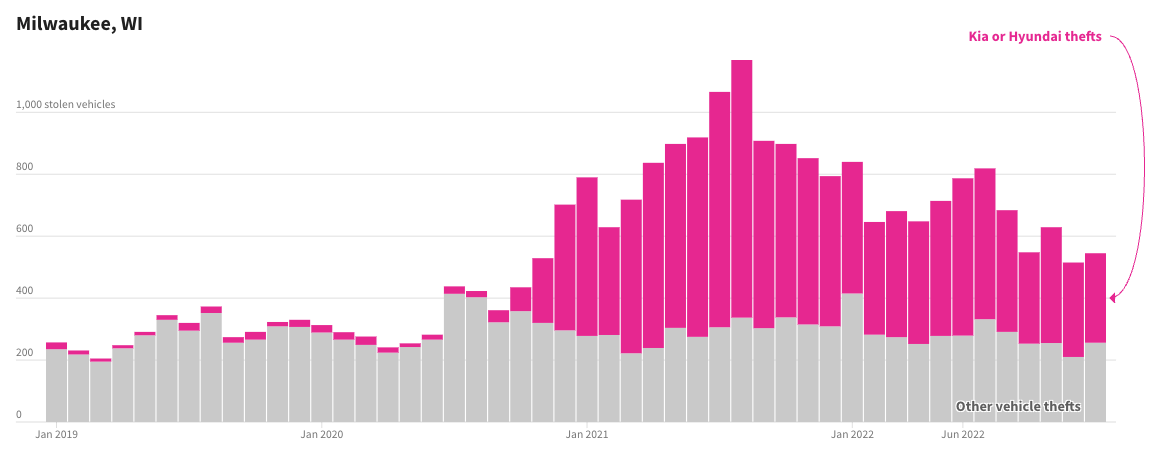
Soon after, around the country car thefts spiked, with some absurd statistical outliers — such as Rochester, NY, which experienced a 2,400% increase in car theft during the first 3-months of 2023. As it unfolded, it was all too easy to see the dramatic rise of car theft in Milwaukee as couched within a broader “Crime Wave,” mirroring the increase in violent crime statistics from 2019-2023; and, according to Council on Criminal Justice, mirroring its decline by the tail end of the year. Nonetheless, this is a more convenient reality than the truth.
Because, unlike the rise of violent crime (which was a trend in the “statistical” sense), the rise in vehicular theft—which disproportionately impacted Kias and Hyundais—could be directly attributed to a trend in the “internet” sense. An internet trend which first emerged in Milwaukee around the summer of 2021, beginning with viral videos depicting boys joyriding down city streets and sidewalks, before gaining national notoriety in 2022 when videos demonstrating an exploit to steal Kias and Hyundais went viral on TikTok.
While sometimes referred to as the “Kia Challenge,” according to Know Your Meme, this description came from a car-theft victim in Indiana, and was repeated by local news outlets in July, 2022. Instead, it was the young Milwaukeens themselves, boys as young as eleven, that gave the trend its spark and its name. They called themselves the Kia Boyz.
In time, the Kia Boyz became a cultural phenomenon: bystanders shared videos with the hashtag #KiaBoyz, joyriders broadcasted their successes and exploits, and even victims filmed their perpetrators and shared their visceral reactions to the thefts on social media. The digital ecosystem that had formed around the Kia Boyz created social and financial incentives for participation in the trend, leading to an entire sub-genre of “Kia Boyz” music from around the country, and (most notably for the Milwaukee-area) the rise of Instagram pages such as 414HypeHouse that served as conduits for popularizing content tied with the Kia Boyz.
Now, with the “Kia Challenge” effectively in society’s rearview mirror I think it is due time to reflect on how today’s algorithmic media ecosystem may have helped to create a synthetic trend with massive real world implications. A press bulletin by the National Highway Traffic Safety Administration emphasizes these consequences: the exploit affected nearly 10 million cars in the U.S., and the Kia Boyz were involved in at least 14 reported crashes, causing 8 fatalities.
Executive Dysfunction
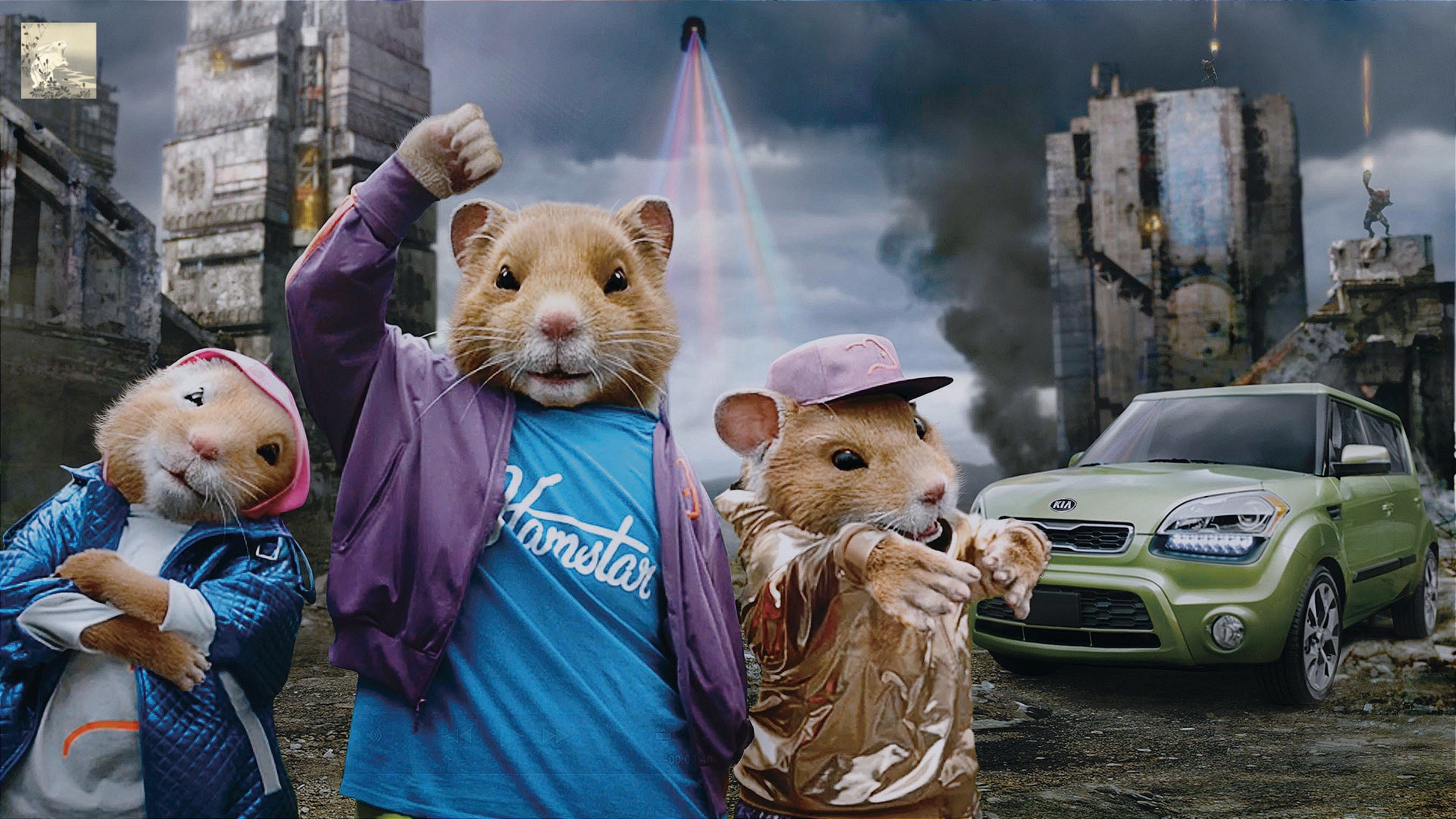
For all the reputational damage the Kia Hamsters and the Kia Soul caused in my young eyes in 2011, the executives of Hyundai—the brand’s parent company—had made a far worse decision that year.
Starting in 2011, in an effort to cut the costs of manufacturing Kias for the U.S. market, executives of Hyundai decided to skirt industry-wide security standards. In particular, Kias from 2011-2021 and Hyundais from 2015-2021 were manufactured without a simple anti-theft mechanism called an electronic immobilizer.
Simply, the immobilizer ensures that a vehicle recognizes a chip embedded in the correct key to start the engine. (Said another way: the key has to be in the ignition.)
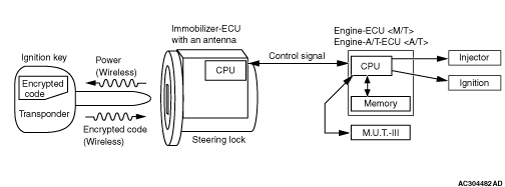
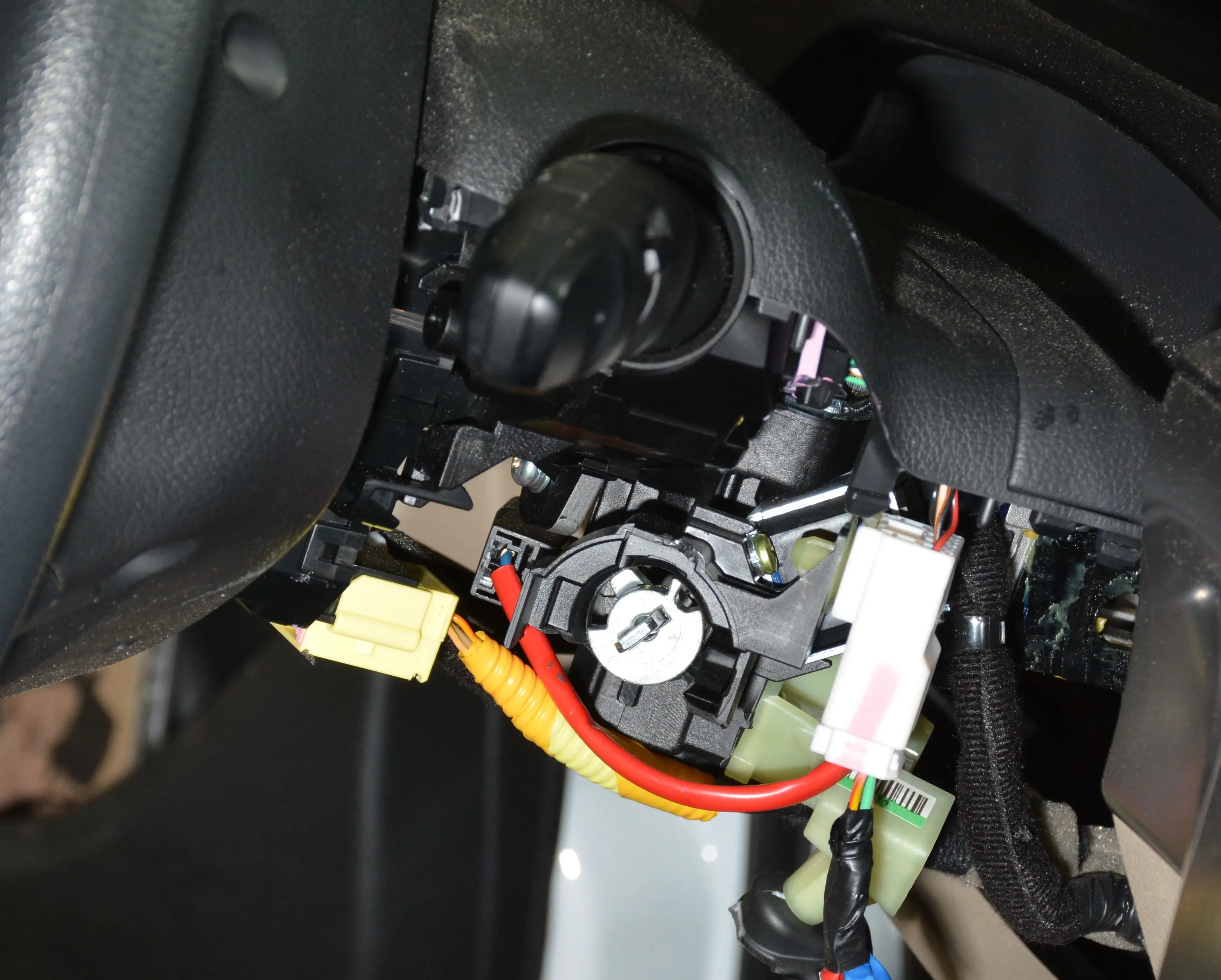
Although the immobilizer system does not outright prevent theft, it is a major deterrent for the “smash and grab” tactics used by joyriders. Because, (as it turns out) absent an immobilizer, young boys in Milwaukee learned that Kias and Hyundais could be stolen with nothing more than a flathead screwdriver and a USB cable.
An article for The Verge describes how:
Tucked away beneath the ignition cylinder is a tiny knob ideally suited for any USB-A plug to turn and start the ignition. After breaking the window and prying open the steering column, a curious Kia Boy can use the victim’s own phone charger to start the car, a procedure that is disturbingly unsophisticated.
According to a report by the Highway Loss Data Institute (HLDI), in 2015 only 26% of all Hyundai and Kia models were outfitted with immobilizers, while they were “standard on 96% percent of other manufacturers’ vehicles.” Kia and Hyundai lagged far behind the industry average going back to 2000, when 62% of other manufacturers’ vehicles were outfitted with immobilizers.
Andrew Beckford, a former Staff Editor for MotorTrend, derided the company (in a paragraph-long polemic) for its negligence:
More important, it requires the key to be in the ignition switch to turn the vehicle on, a wild concept first introduced by Chrysler in 1949. Not only is that a measure that we reckon 8.3 million people probably think should have been implemented in the first place, it seems like a baseline security measure since at least the advent of coded keys a few decades ago.
Over a decade after the seeds of dysfunction were planted, they flourished during the pandemic. It was a perfect storm of boredom, despair, accessibility, and opportunity.
From Access to Praxis
Although the Milwaukee PD had noticed the uptick in car thefts targeting Kia and Hyundai cars in the final months of 2020, there was little information at that time to suggest that there was any coordination or information sharing occurring between joyriders in the city. Still today, much of this early period of “Kia Boyz” activity in Milwaukee is clouded in myth and rumors of convenience. For example, it remains largely unknown how Milwaukee’s joyriders first learned to target cars without immobilizers, or when that information first began to spread throughout the city.
Nonetheless, here is what we do know:
The initial assessment of the Milwaukee PD was quickly complicated by a string of viral incidents. First, in June 2021, after a brief police chase, a stolen Kia Sportage ferrying four teenagers, age 12-16, collided with a car at an estimated speed in excess of 60 miles per hour. The city reeled from the incident, as the sixteen-year-old driver was killed, and his passengers were left in critical condition. None had been wearing seat belts.
Then, just as schools re-opened from Covid in August, another string of incidents effecting Milwaukee’s public schools were caught on camera. First reported on August 18th, these videos depict multiple unnamed juveniles in Kias and Hyundais driving recklessly through the lawn of Marshall High School, winding through a street lined with school buses, and plowing through sidewalks crowded with students. None were old enough to have driver’s licenses.
According to reports from the Shepherd Express, something had changed in the city that summer: “videos began circulating of joyrides in stolen cars, each trying to outdo the last in terms of recklessness.” By August, the phenomenon of viral juvenile joyriding content in Milwaukee had been given the name “Kia Boys/z” by bystanders and influencers, after the car brand most prominently featured in these videos. And around the same time, perpetrators of “smash and grab” joyrides, young Milwaukeens themselves, began to call themselves the Kia Boyz.
Something else had changed that summer, too: there was an emergent media ecosystem helping to popularize joyriding content along with the moniker of Kia Boyz.
In Milwaukee, there was no one account more responsible for creating a buzz around the thefts than 414HypeHouse, a Milwaukee-based Instagram page, which began to “post follower-submitted videos of the joyrides frequently, mostly from bystanders.” According to Allen Halas of the Shepherd Express, in the week following August 18th, the account posted six videos of (allegedly) stolen cars driven by (apparent) juveniles using the hashtag #KiaBoys.
The developing internet dimension of car theft in Milwaukee had fundamentally changed the landscape. And naming the trend had given it even greater power, adding kerosene to an open flame. Even well-intentioned content, intended to educate the public to the risks of the Kia Boyz, had the unintended consequence of broadcasting (if not outright advertising) how to join the trend. No longer could car thefts targeting Kia and Hyundai models be written of as random, or wholly uncoordinated.
Raymond Surette, a Professor of Criminology at the University of Central Florida, characterized performance crimes as “criminal activity where people actively post or stream criminal behaviors, usually their own, either at the time of the crime or after the fact.” According to Surette, “performance crime” trends existed prior to the I.A.W.K.I (Internet As We Know It), predating platforms like TikTok or Instagram. For example, Surette points to the 2006 Ghost Ride the Whip meme featured in this piece’s opening video, an early performance crime that became popular through “rap songs, YouTube postings and Google searches.” The trend encouraged people to commit an unusual traffic violation: abandoning your vehicle (to dance next to it on video).
The Kia Boyz trend represents a new incarnation of the performance crime trend, with car thefts, chases, and reckless driving (un)wittingly documented and shared online, whether by a perpetrator or bystander. Although the Kia Boyz persisted through many of the same means as its predecessor—rap songs, YouTube postings, et. cetera—there are at least two critical differences in the media ecosystem that I believe supercharged the trend: (1) the financial and social incentive structures that encouraged participation in the digital dimension of the trend, and (2) inconsistent content moderation across social media platforms.
These incentives become particularly salient when considering the influencers who profited most off of the trend. Consider 414HypeHouse as a central example. Not only did the account help to popularize the trend, by posting footage from victims and bystanders, but it continues to regularly post memes and videos attributing local car thefts and accidents to the Kia Boyz — despite a significant downturn in juvenile joyriding in the city. The account, managed by “RBF Jbone,”—a local rapper, influencer, and would-be streamer—now sits at over 145,000 followers, and he frequently uses the page for self promotion. Despite his role in glorifying the Kia Boyz trend, Jbone met the Mayor of Milwaukee last month; similarly treating it as an opportunity for publicity.
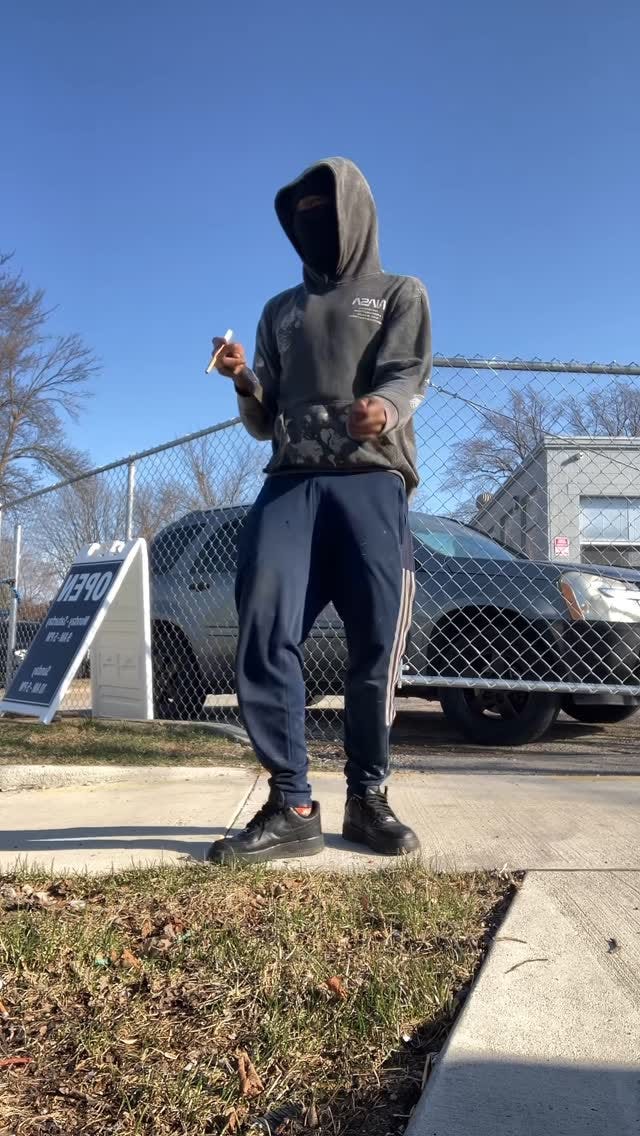
Beyond 414HypeHouse, those most responsible for popularizing the Kia Boyz trend were, ostensibly, well-intentioned YouTube documentarians. This started with the incredible virality of the “Kia Boys Documentary (A Story of Teenage Car Theft” (2022) created by Tommy G, a Milwaukee native, who documented how local Kia Boyz in Milwaukee carried out their smash and grab thefts.1 For one of his interviewees, the “documentary” resulted in felony charges.
There was another major unintended consequences to the video: social media users clipped a section of the video, which went viral on TikTok and Instagram, clearly showing how to carry out the Kia Boyz immobilizer exploit. Although Kia Boyz content had long populated social media platforms, thanks to Tommy G, there now was a clear user guide for how to copy the Milwaukee Kia Boyz.
Although other YouTube pages later published videos explaining the exploit, such as Donut Media’s “I Stole a Kia With a TikTok Hack” (2022), by that time it was too late; the videos had already had a lasting imprint online.
Beyond the incentive structures for perpetrators, victims, and influencers to publish Kia Boyz related content, the persistence of this content must be understood as a failure of inconsistent content moderation practices across social media.
According to an article by Vox, suppressing the spread of Kia Boyz content was perhaps most difficult for TikTok, where there is a significant “gray area” of content supporting the trend that may not violate the platform’s rules:
Videos of people driving Kias dangerously, for example, might get slapped with a “don’t try this at home” warning, but it’s not showing the act of stealing the car, nor is it definitive that the car has been stolen in the first place. Or maybe it’s a video someone took of a Kia being driven dangerously, but there’s no evidence that the person who took and posted the video was involved in its theft (or, again, that it was stolen at all). There is an argument to be made, however, that these videos are glorifying the Kia Boys and the Kia Challenge, and that the hope of going viral is one of the reasons people are doing the challenge at all.
According to the same article, Instagram, similarly struggled to adequately censor outright instructional theft videos. Merely searching for hashtags associated with the Kia Boyz reared results advertising how to start “cars with pliers and USB cables, which have been up for over a month with more than 30,000 views each.”
Even YouTube, which has a much stronger moderation policy, was accused (by interest groups representing insurers) of not doing enough to suppress instructional theft videos on the platform. Although a spokesperson for YouTube is quoted in the article as saying that the platform’s policies “prohibit videos that encourage dangerous or illegal activities that risk serious physical harm or death,” both of the above YouTube videos (sitting at 8.5 and 4.5 million views respectively) still remain on the platform
As a result, content moderation efforts across platforms failed to effectively suppress the more malign digital elements of the Kia Boyz trend, such as videos demonstrating the immobilizer exploit, because of the overwhelming amount of benign media output—from rap songs to unverified bystander footage.
Fade to Black
Despite the persistence of the Kia Boyz online throughout 2023, soon after, the trend met its end offline. Unlike most digital trends, which wither under the weight of nothing more than elapsed time, ending the Kia Boyz trend required the culmination of almost two years of coordinated effort between local law enforcement and state agencies.
Initially, as evidenced by Milwaukee, local police departments struggled to respond to the onslaught of car theft — while also identifying the root of the issue.
As a phenomenon, juvenile joyriding differs significantly from other forms of car theft. For example, the Kia Boyz differ from other forms of organized car theft because, according to a press bulletin by the Insurance Institute for Highway Safety (IIHS), in destroying the steering column, a thief is “causing so much damage that it’s not easy to re-VIN and resell the vehicle on the open market.” Thus, unlike other car theft waves, the Kia Boyz are not directly profit driven. (Although, admittedly, the prospect of internet clout and virality later created a profit incentive.)
Moreover, despite the tone of local news reporting, The Verge clarifies that local law enforcement are not treating the Kia Boyz as a gang:
They have no hierarchical bureaucracy, initiation rituals, or capital. The Kia Boys, sometimes referred to as the Kia Boyz (Milwaukee) or the Real Kia Boys (Columbus), are a decentralized crusade of underage car thieves. The label “Kia Boys” less implies an official organization as it does a blanket term for any teenager who steals Kias and Hyundais for joyrides. Most of them are said to be between the ages of 12-15 — too young to have a driver’s license or work.
As a result, local PDs had to craft a response better tailored to the Kia Boyz as a performance crime trend and a cultural phenomenon.
For example, in Milwaukee, the initial rise of the Kia Boyz in 2021 was, in no small part, fueled by abysmal clearance rates—the percentage of reported thefts that are solved—with 11% of car thefts resulting in arrest, and only 5% in prosecution. In turn, local police departments focused more on arresting, charging, and jailing repeat offenders, even juveniles offenders who had previously received proportionally lighter sentences. Across the country, as local police arrested repeat offenders, usually for more serious charges, they grew more confident that this would disrupt the Kia Boyz.
More significantly, local PDs turned to community outreach and education initiatives, raising public awareness of the threat to Kia and Hyundai car owners. This included efforts to distribute steering wheel locks, at no cost to effected consumers, which were supported by both car companies. In total, AutoEvolution reports that Hyundai donated over 165,000 anti-theft devices to over 100 law enforcement agencies.
Although it would take time for local law enforcement to adapt to the Kia Boyz, these agencies were meaningfully supported by lawsuits brought by state agencies and municipalities.
Critically, in addition to individual wrongful death suits filed against the Korean car giant(s), seventeen municipalities in seven states successfully litigated Kia and Hyundai under “various state-law causes of action for damages and other relief for their alleged injuries arising out of thefts of the Relevant Vehicles.” According to Hagens Berman LLP, the multi-district litigation ended in a $200 million settlement to be paid out to effected consumers — upon the completion of two appeals filed by the company. (the recently reported figure has been closer to $145 million.)
While Kia and Hyundai had previously contributed, nominally, to law enforcement efforts to curtail the Kia Boyz, such as providing stickers and steering wheel locks to car owners, the multi-district litigation likely served to further compel the car giant(s) to meaningfully react.
For example, while Hyundai had previously advertised a security upgrade package for its effected vehicles, the upgrade cost $170 plus over $500 in installation costs. This changed, beginning in February of 2023, with both companies committing to roll out theft deterrent software that, according to the NHTSA, “updates the theft alarm software logic to extend the length of the alarm sound from 30 seconds to one minute and requires the key to be in the ignition switch to turn the vehicle on.” Although this update still required a journey to the local dealership, unlike the prior upgrade, this one was free.
It was this software update, more than any one arrest, law enforcement decision, or lawsuit that led to theft and vandalism claims being cut in half by the end of 2023.
Conclusion
Ultimately, it was not effective content moderation or ethical corporate governance that took the steam out of the engine of the trend, but the real life slog of bureaucracy, governance, and litigation.
Although I have left you with the conclusion that the “Kia Boyz” trend is over, some journalists—whether for clickbait or from conviction—do not agree.
Tech journalists, for example, warn of new technologies like FlipperZero, an open source device which can be loaded with firmware to remotely unlock vehicles from virtually every major car brand in the U.S. market. Although the initial article, published by investigative tech journalists at 404media, acknowledged Flipper devices as potentially enabling a high-tech version of the Kia Boyz, subsequent articles from car blogs and newsletters have run with this connection. Motor culture and local journalists have, likewise, continued to attribute local car thefts to the Kia Boyz based on alleged ties or self-association—such as a string of articles from local news in Western Washington—and have written about the “nationwide” resurgence of the trend in 2025. Articles arguing the latter point, however, largely draw their conclusions from interviews with local police departments and car theft statistics on a municipal or regional level.
Nonetheless, for all the discourse that still exists about Kia Boyz car theft, I believe it is more pertinent to examine the digital culture emboldened by the trend. Because, despite eventual (incremental) success at curtailing the effectives of the Kia Boyz immobilizer exploit, there was no equivalent success—let alone concerted effort—in undercutting the digital infrastructure and incentive structures that made a performance crime trend so sustained and potent that it impacted national crime statistics.
Since the emergence of the Kia Boyz in 2021, the quality of the information ecosystem has backslid dramatically, with an ever-worsening approach to content moderation and ever-growing social and economic incentives for the pursuit of virality and influence. As someone well schooled in Balk’s Laws of the Internet, championed by internet nihilist blogger Alex Balk, I too believe that “if you think the Internet is terrible now, just wait a while.”
Instead of continuing speculation about the re-emergence of the Kia Boyz, we must ask a better, albeit simple, question: what performance crime trend will come next? And how will our digital culture accelerate it?
I do not consider Tommy G as among the “well-intentioned” contingent. Although he continues to call his videos “documentaries,” I believe that he mirrors this style of reporting — absent any code of journalistic ethics. He has (repeatedly) failed to protect his sources, and his approach trends towards sensationalism.